
The Spec Sheet Doesn’t Pour Concrete — Balance Does
On paper, advertised capacity looks like the big selling point.
16 cu. ft. vs 21 cu. ft.
2,500 lbs vs 3,000 lbs.
But out on the mud, capacity alone does not move material efficiently.
Weight distribution does.
A poorly balanced buggy with a bigger bucket will often cycle slower, struggle on slopes, and wear out faster than a smaller machine with proper weight placement.
Contractors who understand this save time, labor, and maintenance costs on every pour.
Advertised Capacity vs Real Jobsite Capacity
Manufacturers advertise maximum bucket volume under ideal conditions:
-
Flat ground
-
Even loads
-
Controlled testing
-
No slope or subgrade variability
That is not reality.
On real jobsites, you’re running:
-
Uneven subgrade
-
Wet mud
-
Ramps and driveways
-
Tight turns near forms
-
Partial loads and shifting material
When weight is not properly distributed across the chassis and tracks/wheels, the “rated capacity” becomes unusable capacity.
What Happens When Weight Distribution Is Poor
This is where bigger buckets actually hurt productivity.
A front-heavy buggy:
-
Digs into soft subgrade
-
Loses steering control
-
Increases operator fatigue
-
Slows cycle times
A rear-heavy buggy:
-
Loses traction on slopes
-
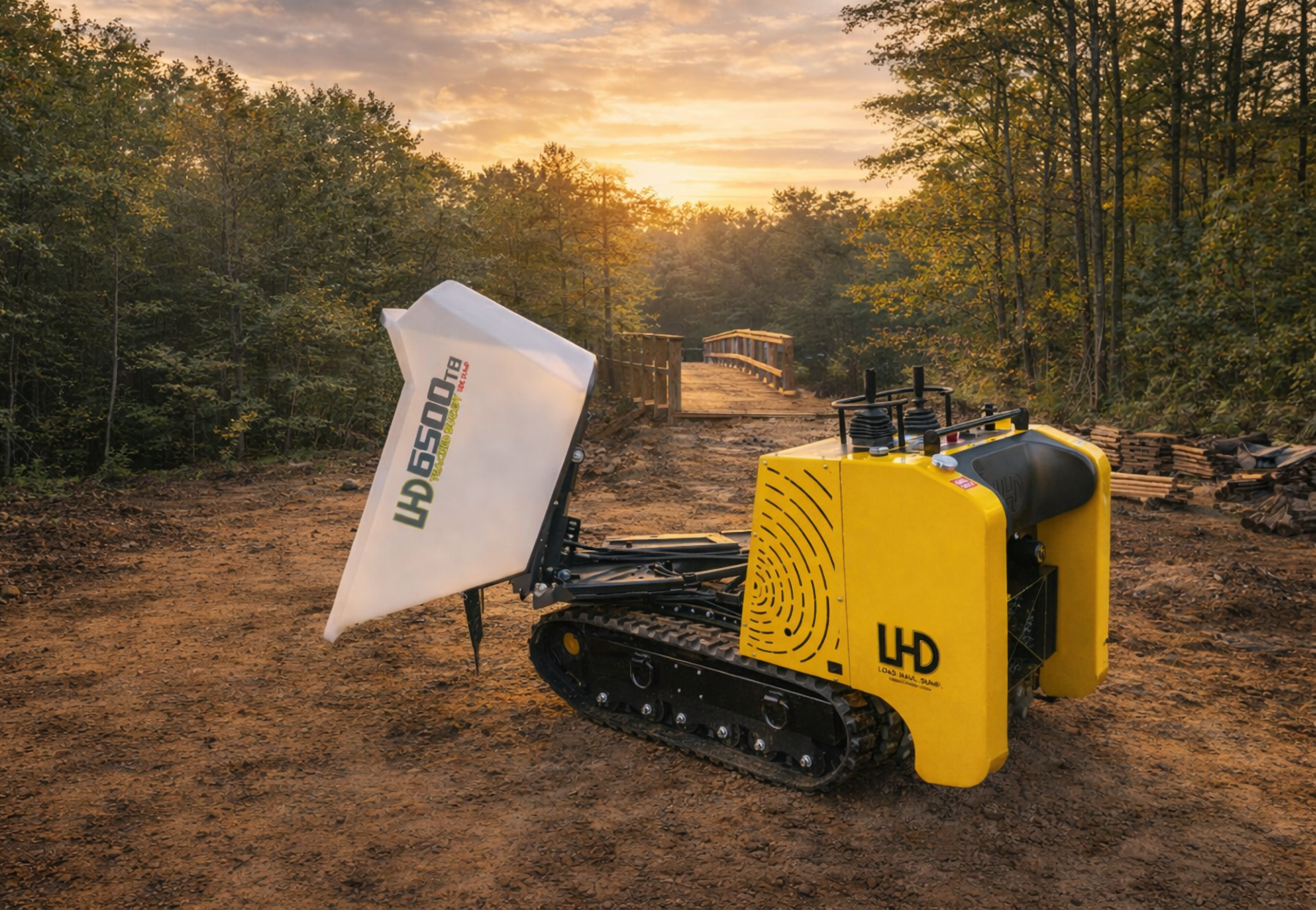
Becomes unstable during dumping
-
Puts excess stress on drive components
Either way, the machine may be rated for a higher load, but the operator will subconsciously underload it to stay safe and stable.
That defeats the entire purpose of a larger capacity machine.
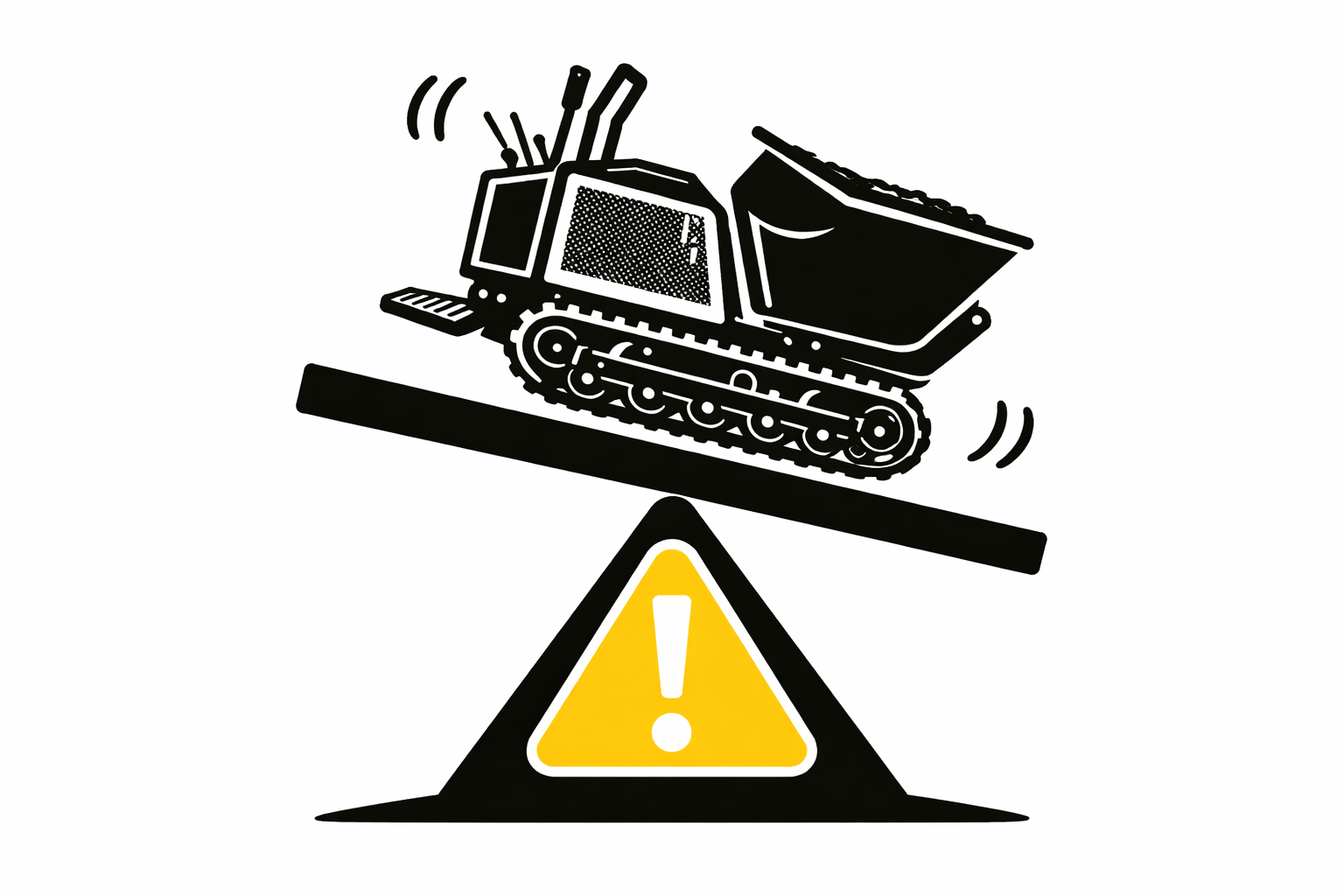
Slopes Expose the Truth Immediately
Flat showroom floors hide bad engineering.
Slopes expose it instantly.
On ramps and graded lots:
-
Poor weight balance causes front dive
-
Traction loss increases rollback risk
-
Machines require slower, cautious operation
A well-balanced buggy keeps:
-
Track/wheel contact consistent
-
Center of gravity low
-
Load stable during uphill travel
That directly translates to faster, safer cycles during a pour.
Cycle Time: Where Contractors Actually Make Money
Let’s be practical.
A contractor does not get paid for bucket size.
They get paid for how fast material moves from truck to placement.
If a larger-capacity buggy:
-
Moves slower
-
Requires partial loads
-
Needs extra caution near forms
Then a slightly smaller but better-balanced buggy will often outperform it across an entire pour.
Over 200+ cycles in a day, stability beats size every time.
Load Shift Is a Hidden Performance Killer
Concrete is not a static load.
It shifts, sloshes, and settles during transport.
If the chassis and hopper design don’t support proper load balance:
-
Steering becomes inconsistent
-
Braking distance increases
-
Dumping becomes less controlled
-
Operator confidence drops
Good weight distribution keeps the center of mass predictable, even with wet, shifting material.
Drivetrain Stress and Long-Term Durability
This is where total cost of ownership comes into play.
Poorly balanced machines:
-
Overload front or rear drive components
-
Increase hydrostatic strain
-
Accelerate tire or track wear
-
Cause premature mechanical fatigue
Balanced machines distribute load evenly across:
-
Wheel motors or track system
-
Frame structure
-
Drive system
That means fewer repairs and less downtime — the real silent profit killer on jobsites.
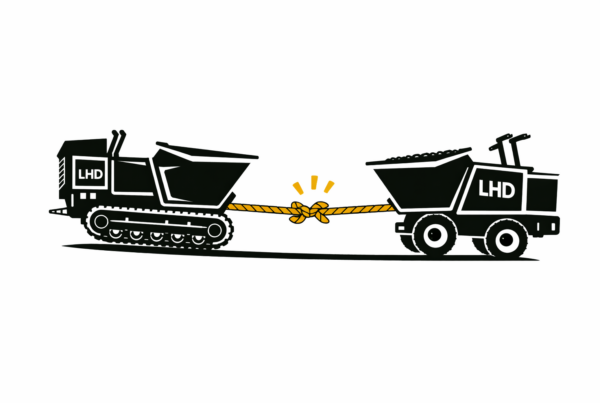
Tracked vs Wheeled: Why Distribution Matters Even More
On tracked concrete buggies especially, weight placement is critical.
If the load sits too far forward:
-
Track pressure spikes
-
Steering effort increases
-
Subgrade damage becomes more likely
A properly engineered tracked buggy maintains even ground pressure, allowing it to:
-
Float better on soft terrain
-
Climb slopes more confidently
-
Maintain traction under full load
This is why some smaller tracked machines outperform larger wheeled units in real-world material handling.
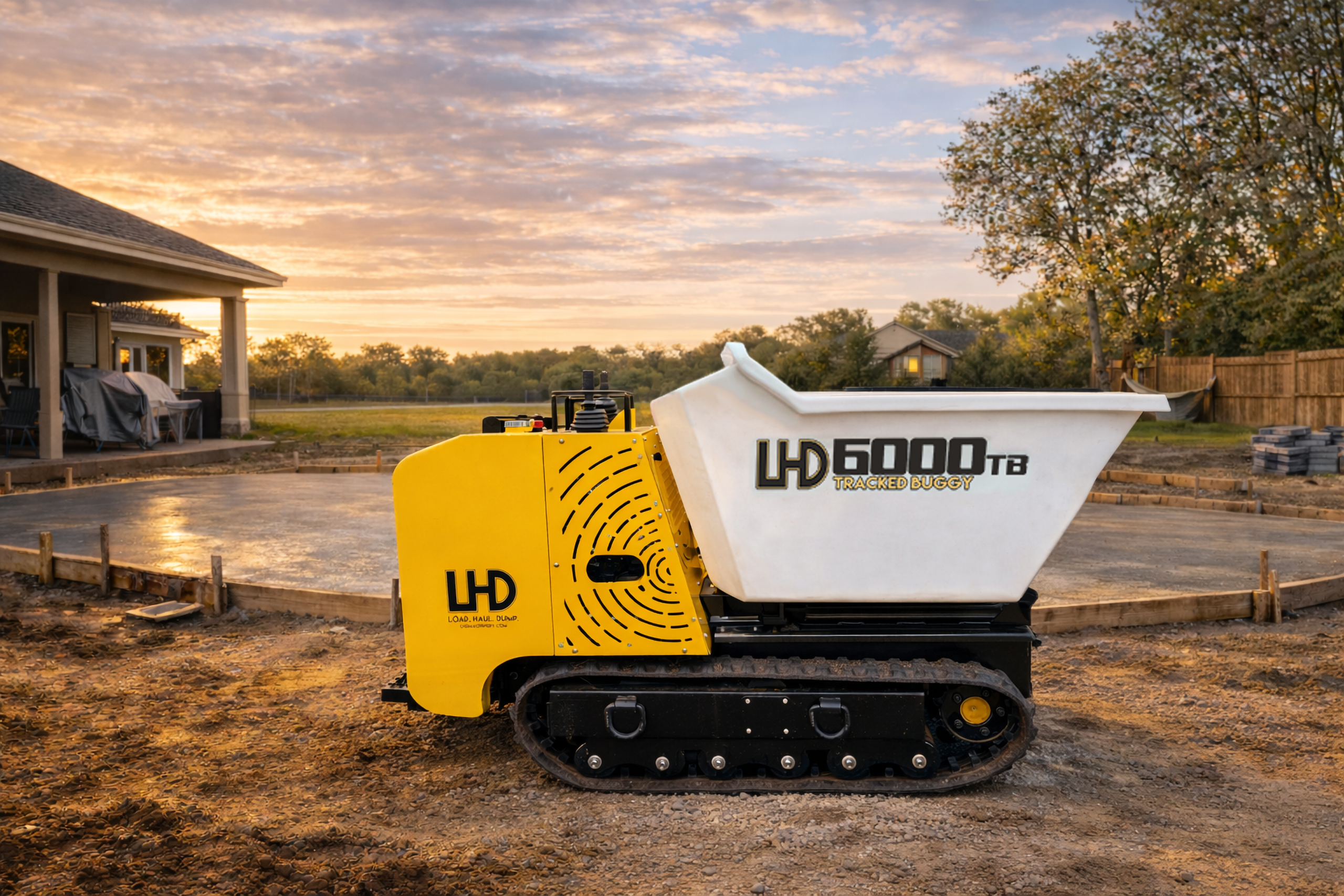
Why LHD Prioritizes Weight Distribution Over Spec Sheet Marketing
At LHD, design decisions are built around real jobsite conditions, not brochure numbers.
That means focusing on:
-
Low center of gravity
-
Balanced chassis design
-
Stable hopper positioning
-
Even load transfer across the drive system
Because a machine that is stable under load:
-
Works faster
-
Lasts longer
-
Requires less operator compensation
-
Reduces jobsite risk
Why LHD Prioritizes Weight Distribution Over Spec Sheet Marketing
At LHD, design decisions are built around real jobsite conditions, not brochure numbers.
That means focusing on:
-
Low center of gravity
-
Balanced chassis design
-
Stable hopper positioning
-
Even load transfer across the drive system
Because a machine that is stable under load:
-
Works faster
-
Lasts longer
-
Requires less operator compensation
-
Reduces jobsite risk
The Bottom Line for Contractors
Advertised capacity sells machines.
Weight distribution keeps jobs moving.
A properly balanced concrete buggy will:
-
Maintain traction on slopes
-
Improve cycle times
-
Reduce operator fatigue
-
Lower mechanical wear
-
Deliver more usable capacity in real conditions
In the field, the machine that stays planted, stable, and predictable will always outperform the one with the bigger number on the spec sheet.
And when you’re cycling material all day on uneven ground, balance is not a luxury feature — it is a productivity multiplier.