
Which Actually Performs Better on Real Jobsites?
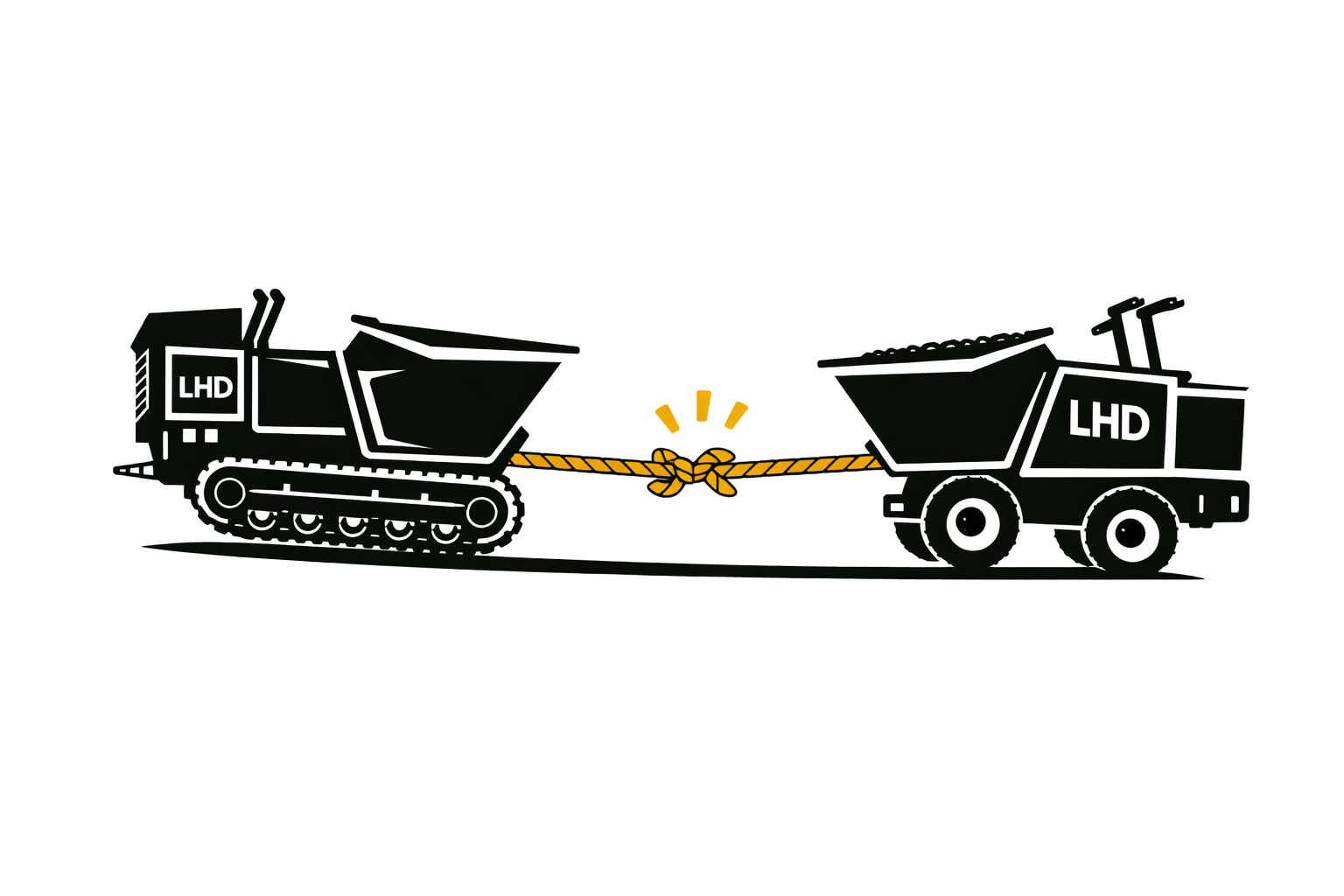
On paper, both tracked and wheeled concrete buggies move material.
On a real jobsite, they perform very differently.
The difference shows up in:
-
Mud
-
Slopes
-
Subgrade conditions
-
Cycle times
-
Operator fatigue
-
Long-term maintenance
Choosing the wrong machine type does not just slow a job down.
It quietly eats into your margins every single pour.
The Core Difference: Ground Contact and Weight Distribution
The biggest mechanical difference is simple:
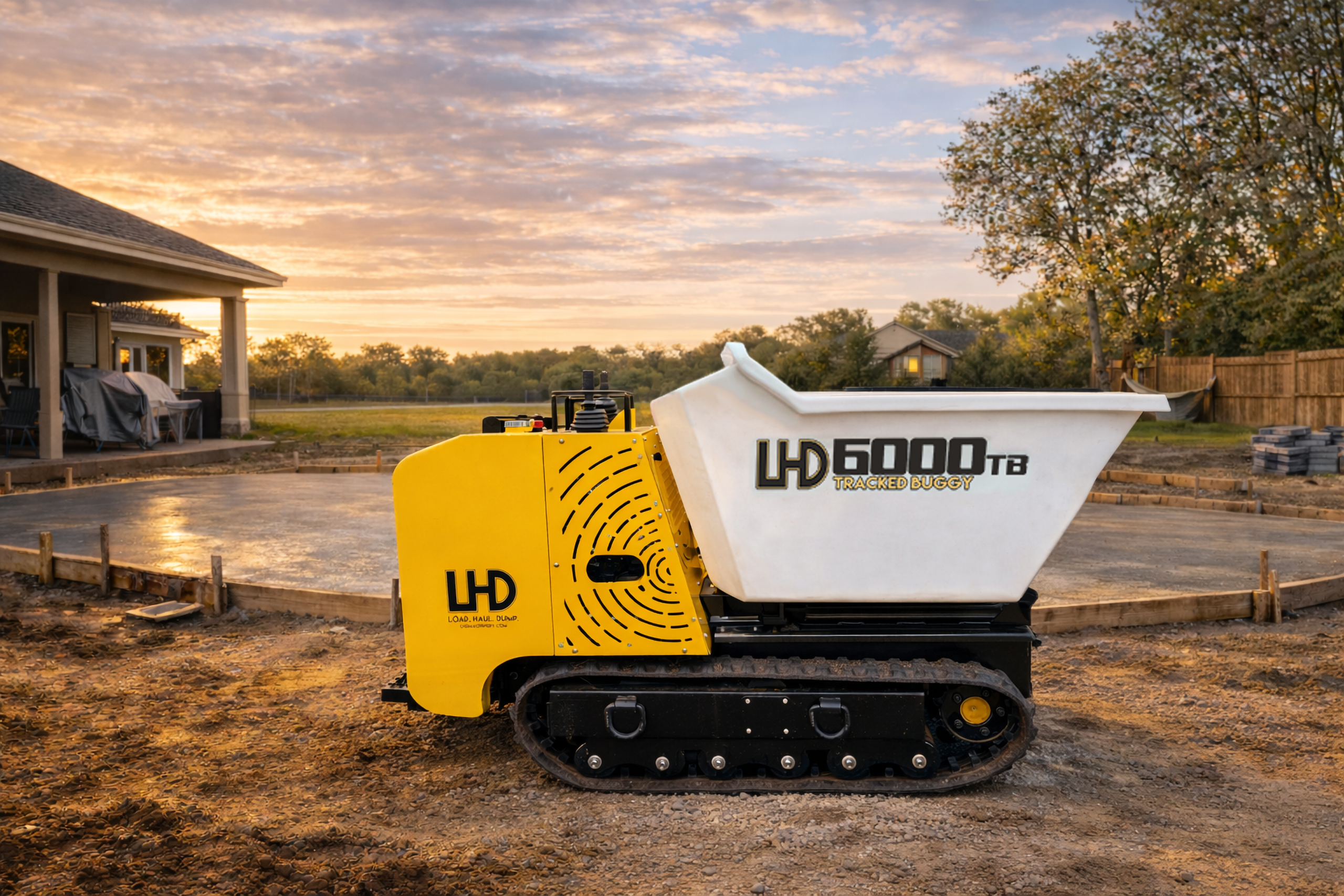
Tracked buggies distribute weight across a larger surface area.
Wheeled buggies concentrate weight on four tire contact points.
In ideal conditions (flat, dry, hard surfaces), wheels work fine.
In real-world conditions (mud, gravel, soft grade), that difference becomes critical.
More ground contact = more traction, more stability, and more usable capacity.
Performance on Mud and Soft Subgrade
This is where tracked machines clearly separate themselves.
Wheeled buggies in soft conditions:
-
Sink faster
-
Spin tires under load
-
Require partial loads to stay mobile
-
Lose steering control in mud
Tracked buggies:
-
Float over soft subgrade
-
Maintain traction under full loads
-
Reduce ground pressure
-
Keep cycle times consistent even in poor conditions
On a wet jobsite, a wheeled buggy may technically have the same rated capacity, but the operator will often underload it just to avoid getting stuck.
Slopes and Inclines: Stability Matters More Than Speed
Concrete jobs rarely happen on perfectly flat surfaces.
Driveways, ramps, and graded lots are common.
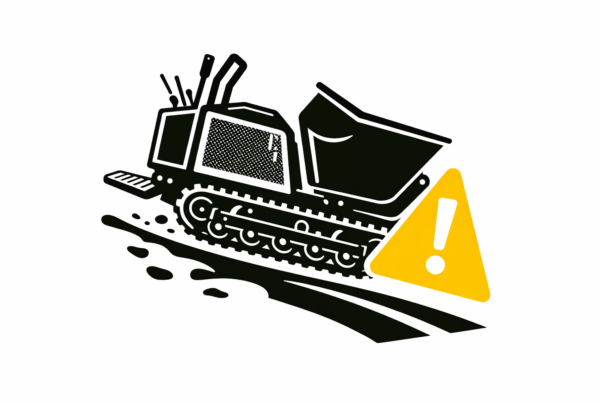
Wheeled buggies on slopes:
-
Higher rollback risk
-
Less braking confidence under load
-
More weight shift during uphill travel
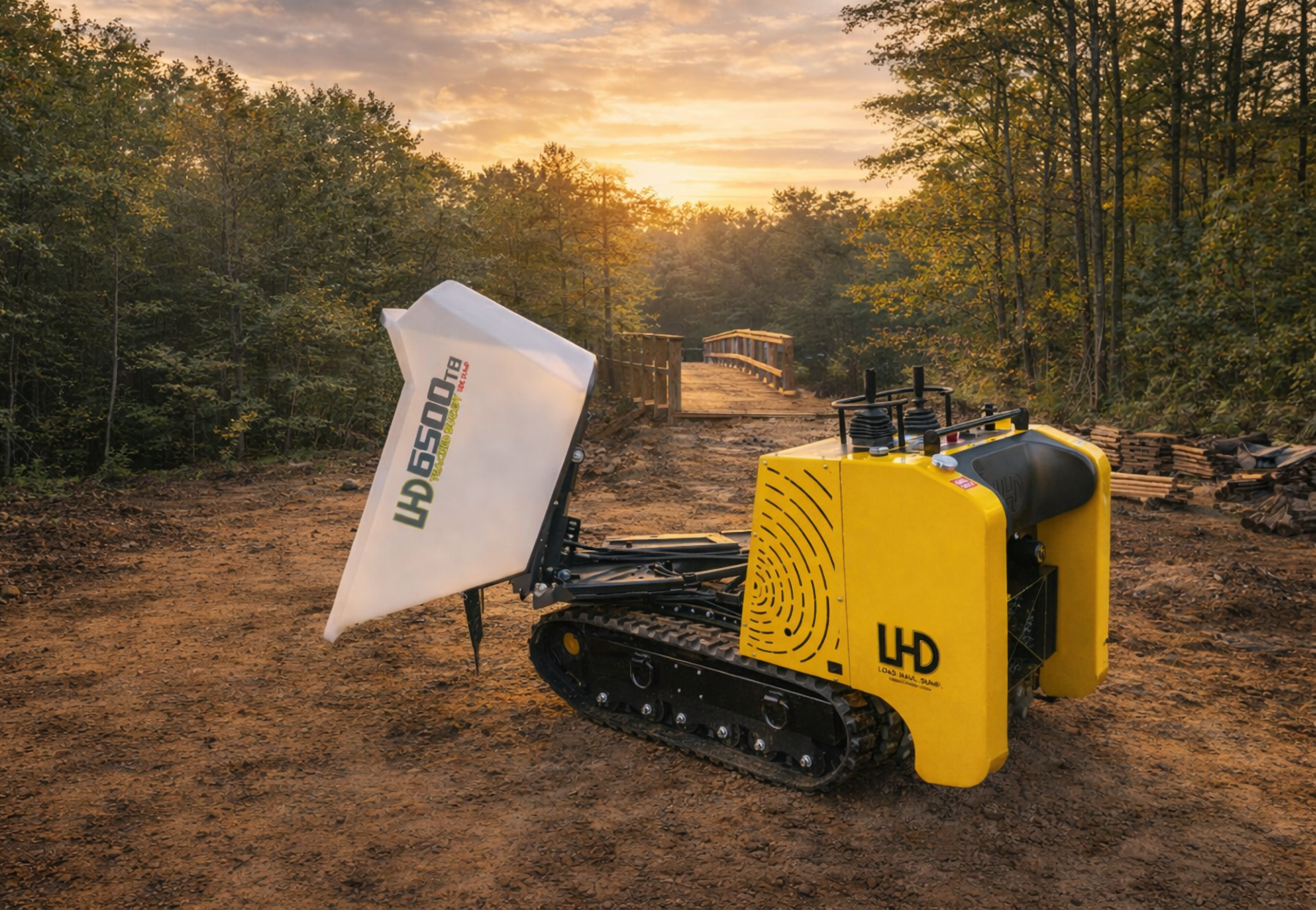
Tracked buggies on slopes:
-
Lower center of gravity feel
-
Better traction climbing grades
-
More predictable stopping and control
-
Increased operator confidence
That stability translates directly into safer and faster material movement.
Maneuverability in Tight Jobsite Conditions
Wheeled buggies do have one advantage: speed and agility on hard surfaces.
They typically:
-
Travel faster on finished concrete
-
Turn quicker on clean slabs
-
Require less steering effort on smooth ground
Tracked buggies:
-
Turn slightly slower
-
Prioritize control over speed
-
Excel in rough terrain rather than polished surfaces
For indoor pours or flat commercial slabs, wheeled units can be efficient.
For rough-access jobsites, tracked units are usually the safer choice.
Cycle Time and Real Productivity
Contractors often assume faster top speed equals faster production.
That is not always true.
If a wheeled buggy:
-
Spins in mud
-
Needs smaller loads
-
Slows down on slopes
-
Requires careful navigation
Then total cycle time increases across the entire pour.
Tracked buggies maintain consistent cycles because they:
-
Carry fuller loads reliably
-
Maintain traction
-
Require fewer recovery stops
-
Handle uneven terrain without hesitation
Over hundreds of cycles, consistency beats peak speed.
Operator Fatigue and Ease of Use
Equipment that fights the operator slows the job down.
Wheeled machines in rough terrain:
-
Require constant steering correction
-
Slip under heavy loads
-
Demand more operator attention
Tracked machines:
-
Feel planted
-
Track straight under load
-
Require less micro-correction
-
Reduce operator stress over long shifts
Lower fatigue means better placement accuracy and higher productivity by the end of the day.
Maintenance and Long-Term Ownership Costs
From a maintenance perspective, both systems have tradeoffs.
Wheeled buggy maintenance:
-
Tire wear and replacements
-
Higher drivetrain stress when spinning
-
Increased wear on soft terrain
Tracked buggy maintenance:
-
Track tension checks
-
Roller and undercarriage wear
-
Slightly higher upfront component cost
However, in harsh jobsite environments, tracked machines often reduce:
-
Downtime from getting stuck
-
Recovery labor costs
-
Mechanical strain from traction loss
And downtime is the biggest silent profit killer in material handling.
Rental Fleets: Which Type Makes More Sense?
For rental yards, the decision is strategic.
Wheeled buggies are ideal for:
-
Indoor work
-
Flat commercial slabs
-
Hard, finished surfaces
Tracked buggies are better for:
-
Residential construction
-
New builds with rough grade
-
Landscaping and site prep
-
Wet or unpredictable terrain
Since rental customers have varying skill levels, tracked machines also reduce misuse risks in difficult conditions.
When a Wheeled Concrete Buggy Is the Right Choice
A wheeled buggy makes sense when:
-
The jobsite is flat and dry
-
Travel distance is long on hard surfaces
-
Speed is a priority over terrain capability
-
Ground conditions are predictable
They are efficient tools in the right environment.
When a Tracked Concrete Buggy Is the Better Investment
Tracked buggies outperform when:
-
Operating on mud or loose subgrade
-
Climbing slopes or ramps
-
Carrying heavy loads consistently
-
Accessing rough or unfinished jobsites
-
Prioritizing stability and safety
In these conditions, traction and balance matter far more than top speed.
When a Wheeled Concrete Buggy Is the Right Choice
A wheeled buggy makes sense when:
-
The jobsite is flat and dry
-
Travel distance is long on hard surfaces
-
Speed is a priority over terrain capability
-
Ground conditions are predictable
They are efficient tools in the right environment.
The Bottom Line for Contractors and Fleet Owners
This is not about which machine is “better” on paper.
It is about which machine performs better in your actual working conditions.
Wheeled buggies offer:
-
Higher speed on hard surfaces
-
Simpler mobility on clean slabs
Tracked buggies deliver:
-
Superior traction
-
Better stability on slopes
-
Consistent cycle times
-
Higher usable capacity in real conditions
-
Reduced risk of downtime on difficult terrain
If your jobsites involve mud, slopes, and unfinished ground — which most do — a tracked concrete buggy is often the more reliable and profitable long-term choice.
Because in real material handling, traction, stability, and uptime will always outperform theoretical speed and spec-sheet numbers.