

Because Jobsites Are Sloped, Busy, and Unforgiving
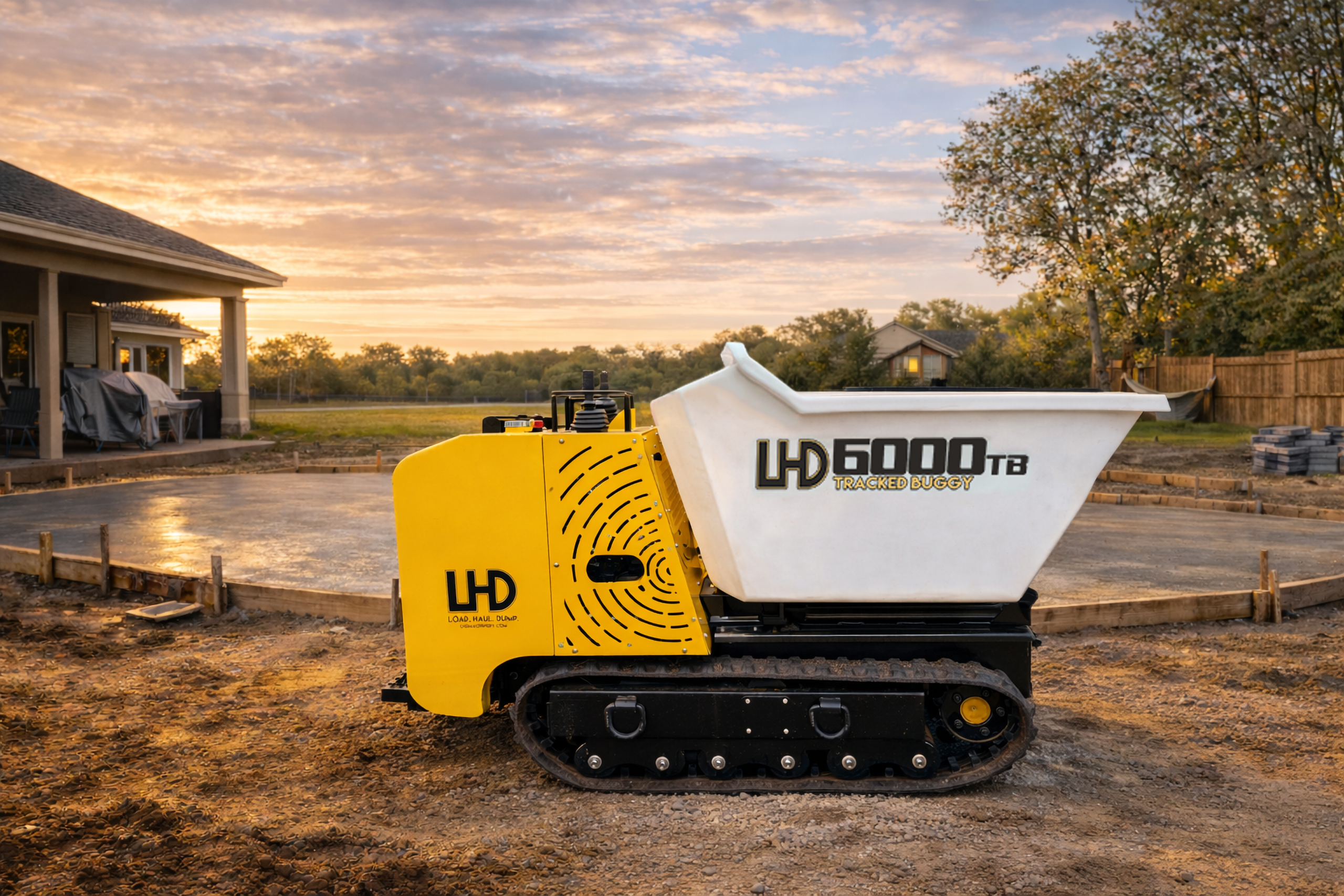
Out on a real jobsite, a buggy is almost never parked on flat concrete.
It’s sitting on:
-
loose subgrade
-
gravel base
-
wet mud
-
driveway slopes
-
basement ramps
-
uneven fill
And half the time, it’s fully loaded.
That’s exactly why LHD machines use automatic park brakes as a standard design choice — not an afterthought.
Because the biggest risk on a pour isn’t horsepower.
It’s an unexpected rollback.
A Loaded Buggy Rolling Is Not a Small Problem
A concrete power buggy is not a wheelbarrow.
You’re dealing with:
-
2,000+ lbs machine weight
-
plus 2,000–3,000 lbs of material
-
on unpredictable terrain
If that machine rolls even a few feet:
-
Forms get destroyed
-
Screeded sections get ruined
-
Crews jump out of the way
-
Liability goes up fast
One rollback can cost more than the price difference between machines.
That is real total cost of ownership.
Manual Park Brakes Rely on Perfect Human Behavior
Here’s the field reality:
Operators are not standing still thinking about brake procedures.
They are:
-
Dumping loads
-
Watching chute placement
-
Cycling back to the truck
-
Navigating tight forms
-
Talking to the pump operator
Expecting someone to perfectly set a manual brake every single stop, on every slope, during a fast pour is unrealistic.
And seasoned foremen know it.
Automatic park brakes remove that human failure point entirely.
What an Automatic Park Brake Actually Does on a Jobsite
On an LHD buggy, the brake engages the moment drive input stops.
Not later.
Not when the operator remembers.
Immediately.
That means:
-
Stop on a slope → machine holds
-
Pause mid-cycle → machine holds
-
Idle near forms → machine holds
-
Operator steps away → machine holds
No rollback creep.
No drift.
No panic grab for controls.
Why This Matters More Than Horsepower in Real Work
Contractors love talking specs:
-
Engine size
-
Bucket capacity
-
Top speed
But on a pour, control and safety beat raw power every time.
A buggy that rolls:
-
Slows cycle times
-
Forces cautious operation
-
Creates rework risk
-
Kills crew confidence
A buggy that locks itself in place lets the operator focus on:
-
clean placement
-
faster cycling
-
tighter maneuvering near forms
That directly improves productivity per hour.
Rental Fleets: Where Automatic Brakes Pay for Themselves
Rental yards see the harsh truth faster than anyone.
Not every operator is experienced.
Not every user reads the manual.
And not every jobsite is flat.
Automatic park brakes reduce:
-
User error incidents
-
Damage claims
-
Runaway machine risks
-
Insurance headaches
For a rental fleet, that is not a luxury feature.
That is risk control.
Mechanical Reliability vs. Field Abuse
From a mechanical standpoint, automatic braking also protects the drivetrain.
Without proper holding:
-
Machines get forced against hydrostatic drive to hold position
-
Drivetrain components absorb rollback shock
-
Wear increases under load on slopes
A dedicated automatic park brake:
-
Holds the load mechanically
-
Reduces stress on the drive system
-
Extends service life in high-cycle environments
That is long-term durability, not marketing.
Designed for Real Slopes, Not Showroom Floors
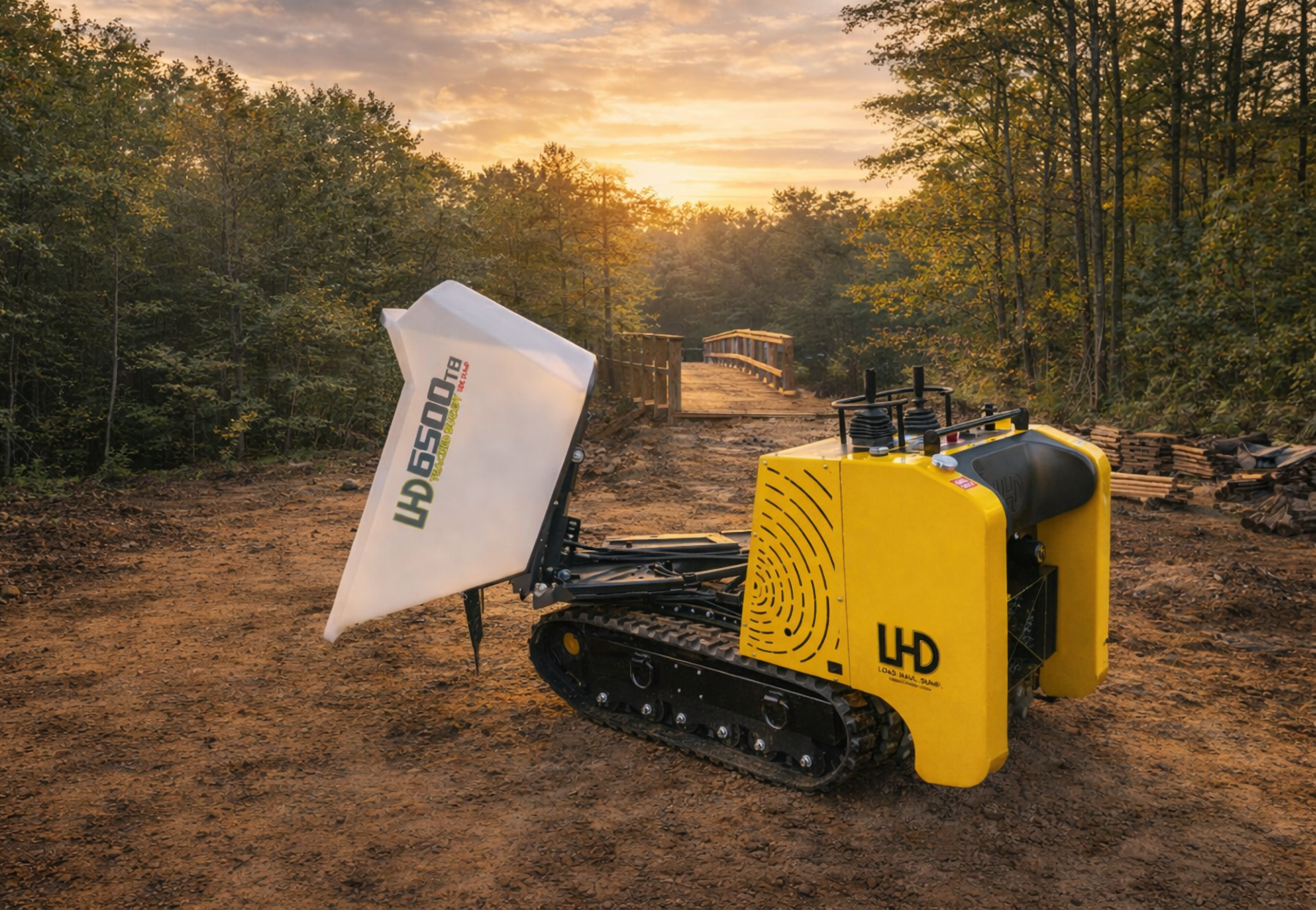
LHD machines are built around how contractors actually move material:
-
Up ramps
-
Across rough grade
-
Through mud
-
Around forms
-
Under time pressure
Automatic park brakes are part of that philosophy:
Simple. Strong. Jobsite-proof.
Just like eliminating belts and pulleys, it removes another failure point — this time on the safety and control side.