
If you’ve been in the concrete game for more than a week, you know the sound. It’s that high-pitched squeal of a belt slipping right when you’ve got a full 16-cubic-foot load of wet mud and a finishing crew waiting on you.
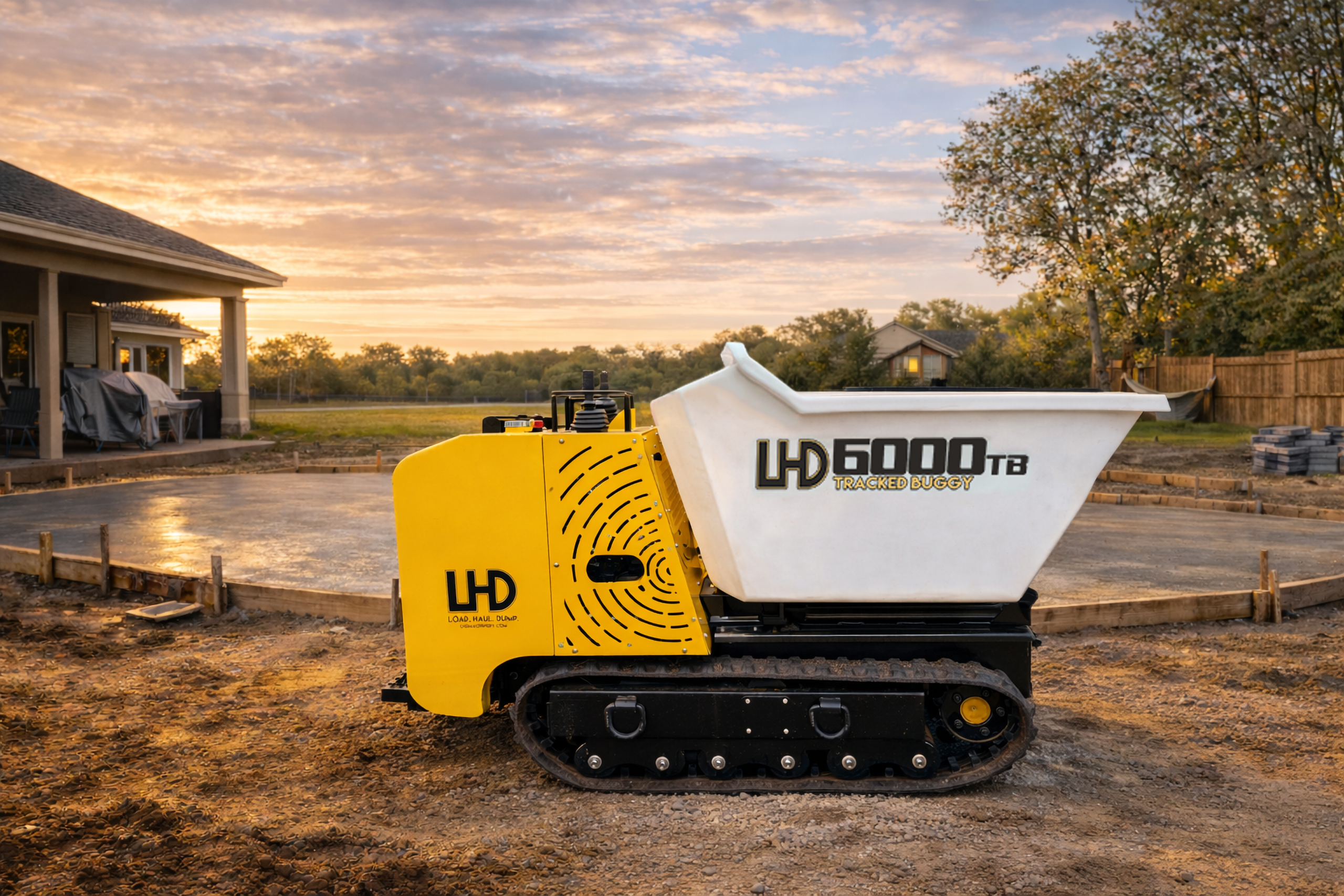
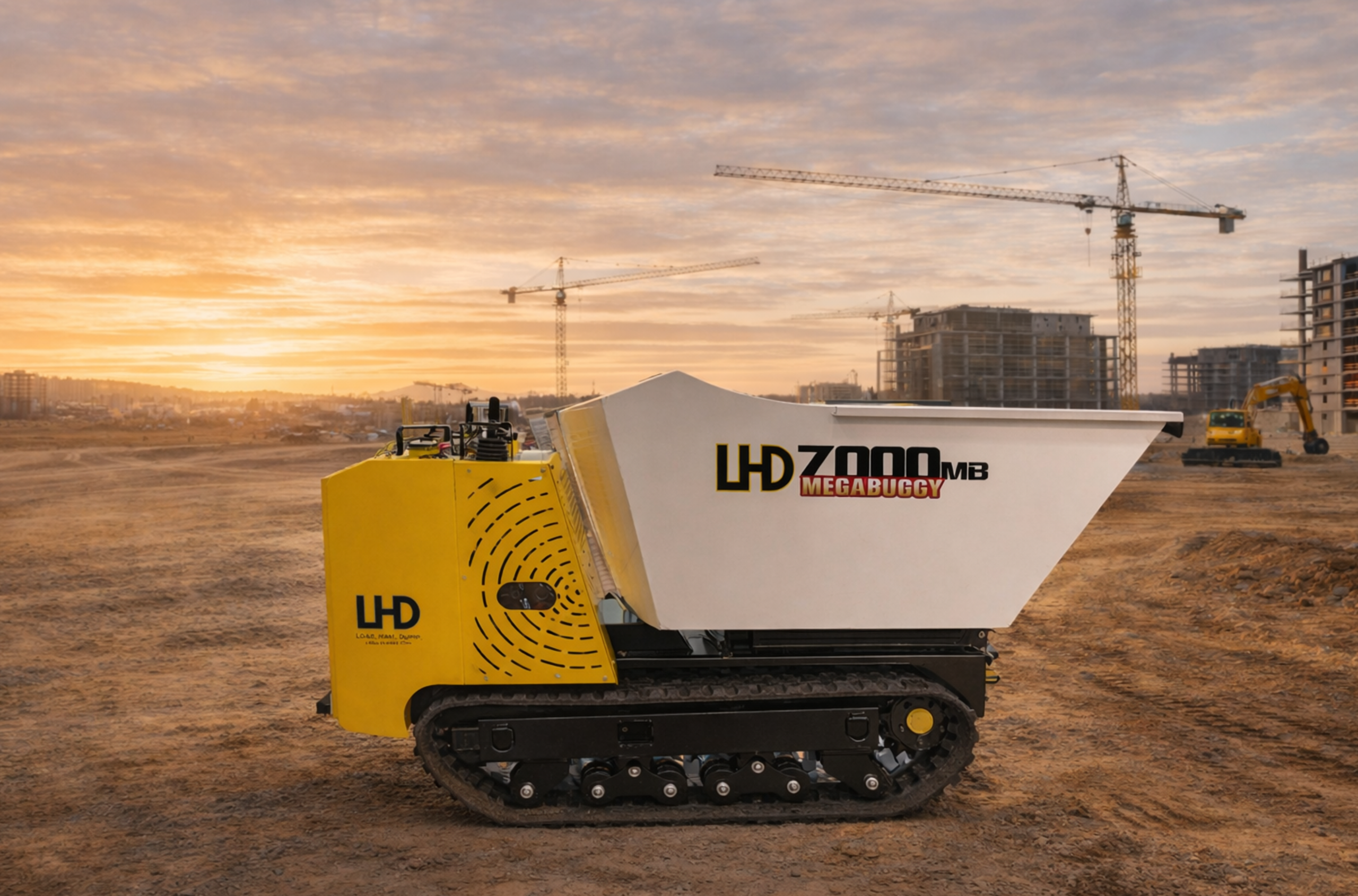
For decades, belts and pulleys were the “standard” for concrete buggies. They were cheap to manufacture and easy enough to understand. But in the modern world of high-stakes pours and tight margins, “standard” isn’t good enough anymore. At LHD Machinery, we made a conscious engineering decision to ditch the belts and move to Direct Drive.
Here is why that shift matters for your business.
The Death of “Wear Parts”
Belts and pulleys are, by definition, wear parts. They stretch, they fray, and eventually, they snap. Because concrete work is inherently dusty and gritty, that abrasive material acts like sandpaper on a belt system, accelerating its journey to the scrap heap.
By utilizing a hydraulic direct drive system, we’ve eliminated those failure points entirely. There are no belts to tension, no pulleys to align, and no midday trips to the parts store because a $30 belt decided to fail on a $3,000 pour.
The Death of “Wear Parts”
Belts and pulleys are, by definition, wear parts. They stretch, they fray, and eventually, they snap. Because concrete work is inherently dusty and gritty, that abrasive material acts like sandpaper on a belt system, accelerating its journey to the scrap heap.
By utilizing a hydraulic direct drive system, we’ve eliminated those failure points entirely. There are no belts to tension, no pulleys to align, and no midday trips to the parts store because a $30 belt decided to fail on a $3,000 pour.
Instant Torque, No Slip
When you’re trying to climb a ramp or navigate a muddy jobsite, you need 100% of your engine’s power to hit the wheels immediately.
-
Belt Systems: Suffer from “parasitic loss.” Power is lost through friction and heat as it travels through the belt.
-
Direct Drive: Provides a 1:1 power transfer. When you engage the drive, the response is instant, consistent, and powerful enough to handle the toughest terrain without the “lag” associated with pulleys.
Precision Control for Tight Pours
Concrete buggies aren’t just for hauling; they are for placing. When you’re backing up to a narrow form or trying to feather a discharge, you need surgical precision.
Belts are notorious for “jerking” as they catch and release tension. A hydraulic direct drive system offers a smooth, variable speed range that allows the operator to move an inch at a time if the job requires it. That level of control doesn’t just make the job easier—it makes it safer.
Maximizing Uptime
At the end of the day, your buggy is a tool meant to make money. Every hour it spends in the shop for “simple maintenance” like belt adjustments is an hour it’s not on the clock. By simplifying the drivetrain, we’ve extended the service intervals and simplified the daily checklist.
The LHD Difference
We didn’t remove belts and pulleys to be different; we did it to be better. We believe that a concrete buggy should be the most reliable person on your crew. By embracing direct drive technology, LHD machines stay out of the shop and on the jobsite where they belong.